When people think about food assistance, they often picture a fixed-location pantry. But for many households in Southern Nevada, the biggest barrier isn’t eligibility—it’s access. If a family doesn’t have reliable transportation, lives far from a full-service grocery store, or is navigating mobility or health challenges, “available” food resources may still be out of reach.
That’s why mobile markets matter. They bring groceries directly into neighborhoods where access is limited—reducing transportation hurdles and making it easier for families and seniors to get the food they need with consistency and dignity.
What Is a Mobile Market
A mobile market is a grocery distribution model that travels to the community rather than requiring the community to travel to the food source. Instead of a single centralized location, mobile markets operate through recurring neighborhood events or scheduled routes.
For communities facing food deserts and transportation challenges, this approach is practical, efficient, and often more reliable than expecting households to navigate long distances or multiple bus transfers for groceries.
Why Mobile Markets Work in Southern Nevada
Mobile markets help address three common, local access barriers:
Transportation and Distance
Many households simply cannot get to a grocery store easily. Mobile markets reduce that friction by placing food distribution where people already are.
Neighborhood Food Deserts
Some areas have limited access to affordable, nutritious food options. TJOP’s mobile programs are designed specifically to serve neighborhoods with limited or no access to affordable grocery options.
Consistency
Food insecurity is rarely a one-time event. Mobile markets create recurring access points that help families and seniors plan around predictable distribution schedules.
The Just One Project’s Mobile Market Programs
The Just One Project operates multiple food-access programs, including two core mobile market models that serve Southern Nevada in different ways:
Pop Up & Give Mobile Market
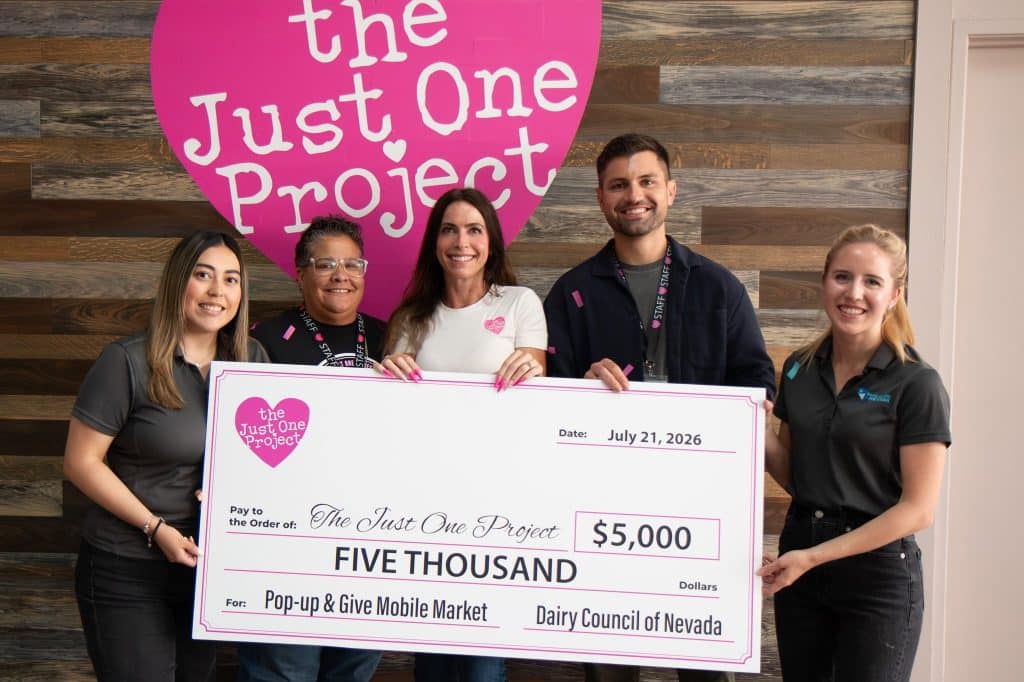
Pop Up & Give is TJOP’s mobile food pantry model, part of its Food For All initiative, bringing groceries directly into food-insecure communities. TJOP partners with CCSD and senior housing communities to host these events and intentionally targets areas with limited grocery access. TJOP’s events listings describe Pop Up & Give as operating through mobile market events at 10 designated CCSD school sites across Southern Nevada (with dates published in advance).
Groceries on the Go
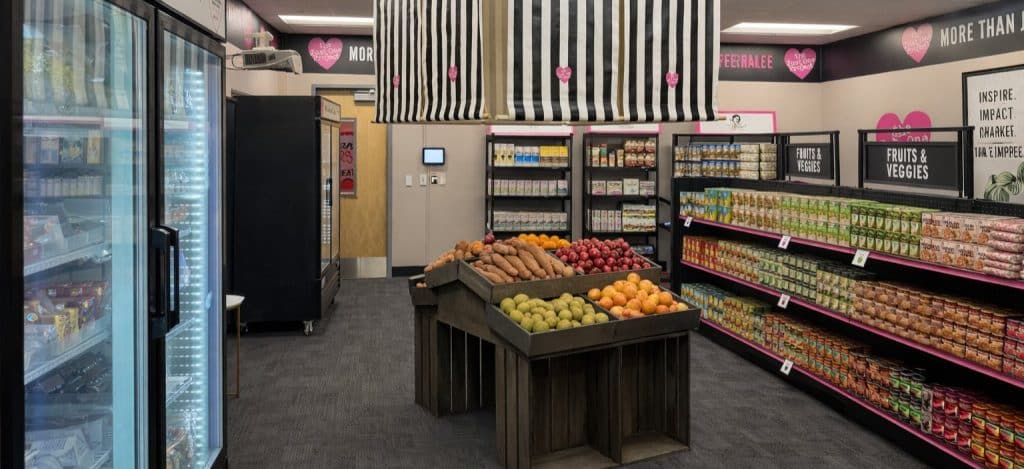
Groceries on the Go is TJOP’s mobile grocery store program designed to bring affordable, fresh food—including nutritious staples like fruits, vegetables, and whole grains—directly to communities that lack access to healthy options. TJOP describes this initiative as a major step toward reducing food insecurity by removing barriers that prevent individuals and families from accessing healthy food.
What to Expect at a Mobile Market
Every program has its own guidelines and schedule, but mobile markets are generally designed to be:
- Accessible (located at familiar, local community sites)
- Efficient (organized distribution processes to serve many households)
- Nutrition-forward (centered around grocery support that includes fresh food options)
For Pop Up & Give specifically, TJOP notes that an appointment is not required to attend a mobile market distribution (with dates and locations provided on the schedule).
Why This Model Matters Long-Term
Mobile markets don’t just move food—they improve the consistency of access. And consistency matters because nutrition is foundational to stability:
- Children do better in school when meals are reliable
- Seniors experience fewer trade-offs between food and other essentials
- Families can allocate limited resources more effectively when groceries are predictable
When food access becomes easier and more consistent, households are better positioned to focus on other stability needs.
A Practical Way to Support Southern Nevada
Mobile markets are one of the most direct ways a nonprofit can respond to local food insecurity—because they are built around real-world constraints like time, transportation, and neighborhood access.
The Just One Project continues to expand and operate these programs to ensure that where someone lives does not determine whether they can access nutritious food.