Support looks different for every individual. For some, it starts with food. For others, it’s housing, employment, or access to resources. At The Just One Project, these needs are not treated in isolation.
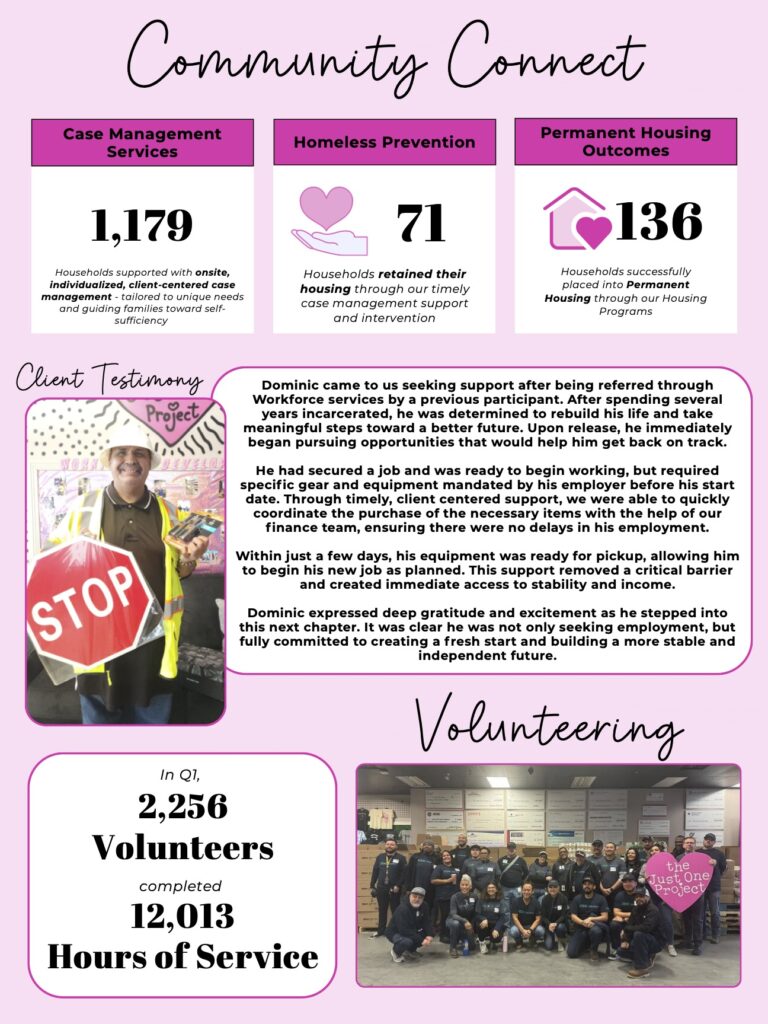
The Just One Project’s Community Connect program provides coordinated, client-centered support across housing, employment, and resource access. By connecting services and reducing barriers, TJOP helps individuals and families move toward long-term stability. 2026 Q-1 data shows over 1,100 households supported through case management, 71 households retaining housing, and 136 placed into permanent housing—demonstrating the effectiveness of this integrated approach.
What Is Community Connect?
Community Connect is designed to go beyond a single service by bringing together the support individuals and families need into one coordinated system.
By aligning programs, partners, and resources, TJOP helps:
- Reduce barriers to access
- Simplify how individuals navigate services
- Provide consistent, ongoing support
This approach allows individuals to move forward with clarity and continuity, rather than navigating disconnected systems.
How the Model Works
Instead of addressing challenges one at a time, Community Connect focuses on how different needs overlap.
For example:
- Housing stability may depend on income
- Employment may require access to equipment or transportation
- Financial challenges may impact both
By coordinating support across these areas, TJOP helps remove the gaps that often prevent progress.
Case Management: The Starting Point
For many individuals, case management is the first point of connection.
Through this program:
- 1,179 households received individualized, onsite case management support
Case managers work directly with clients to understand their situation, identify barriers, and connect them to the right combination of services.
Preventing Housing Loss
A key part of Community Connect is early intervention.
When challenges arise, timely support can make the difference between maintaining housing and losing it.
Program data shows:
- 71 households retained their housing through coordinated support and intervention
This reflects how proactive, connected services can stabilize situations before they escalate.
Supporting Transitions into Permanent Housing
For individuals who need longer-term solutions, Community Connect includes pathways into stable housing.
- 136 households were successfully placed into permanent housing
These outcomes are not isolated—they are the result of coordinated efforts across programs, partners, and support systems.
Removing Barriers to Employment
Community Connect also addresses the practical barriers that can prevent individuals from moving forward.
One example is Dominic, who came to TJOP after being referred through workforce services. After several years of incarceration, he was focused on rebuilding his life and had secured a job.
However, he was unable to start without specific equipment required by his employer.
Through coordinated support, TJOP:
- Identified the need immediately
- Worked across teams to secure the required equipment
- Ensured there were no delays in his employment
Within days, Dominic was able to begin work as planned.
This type of support shows how removing a single barrier—at the right time—can create immediate access to income and stability.
The Role of Volunteers in the System
Community Connect is supported by a strong network of volunteers who help extend TJOP’s reach.
Program data reflects this involvement:
- 2,256 volunteers contributed to TJOP programs
- 12,013 hours of service were completed
Volunteers support operations across programs, helping ensure services remain consistent and accessible.
What the Data Shows
The Q1 program data provides a snapshot of how Community Connect functions as a system:
- Over 1,100 households supported through case management
- Dozens of households maintaining housing through early intervention
- Over 100 households placed into permanent housing
- Thousands of hours contributed by volunteers
- Coordinated support across multiple areas of need
These figures reflect ongoing work and demonstrate how a connected approach can scale to meet community demand.
Strengthening the Network Across Southern Nevada
Community Connect operates across Southern Nevada, including:
- Las Vegas
- North Las Vegas
- Henderson
- Surrounding communities
Through partnerships with local organizations, workforce programs, and community resources, TJOP continues to expand this network—making it easier for individuals to access support in one place.
Looking Ahead
The Just One Project continues to strengthen and expand Community Connect by:
- Increasing access to coordinated services
- Deepening partnerships across sectors
- Streamlining how individuals connect to support
This work is ongoing, adapting to the needs of the community and building a more connected system of care across Southern Nevada.
FAQ: Community Connect Program
What is Community Connect?
Community Connect is TJOP’s coordinated support model that brings together housing, employment, and resource services into one system.
Who can access Community Connect services?
Individuals and families in Southern Nevada who need support with stability, housing, or access to resources.
What does case management include?
Case management includes individualized support, goal setting, and connection to services such as housing assistance, employment support, and financial resources.
How does TJOP help prevent homelessness?
Through early intervention, coordinated support, and resource access, TJOP helps individuals maintain housing during periods of instability.
Does the program support employment?
Yes. Community Connect helps remove barriers that may prevent individuals from starting or maintaining employment.